
Thoughts and Prayers: August
"Things fall apart; the centre cannot hold..."

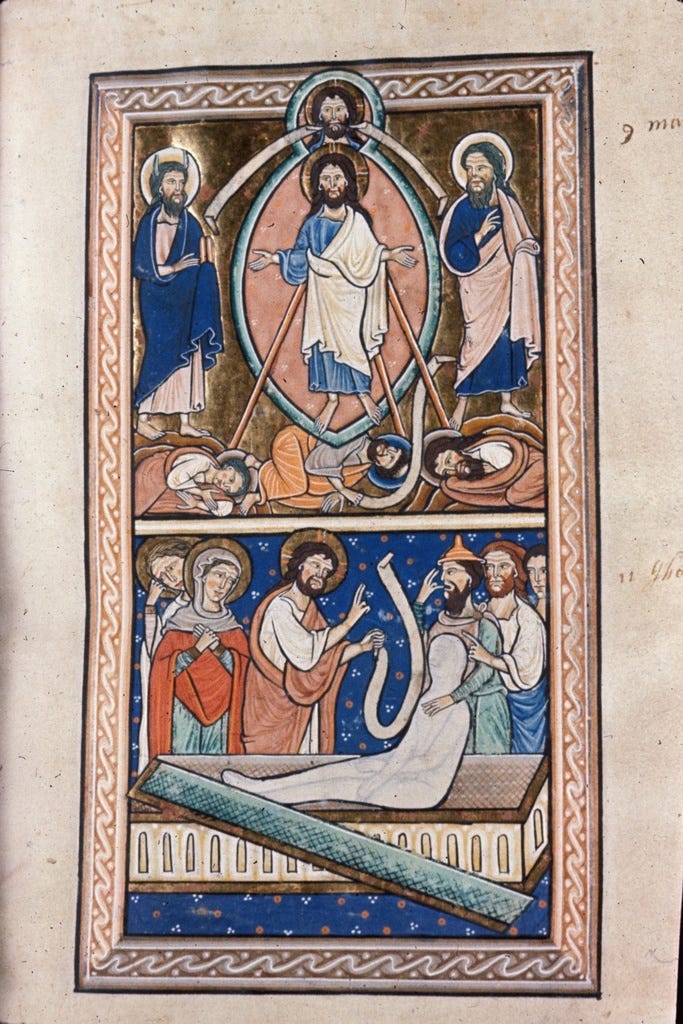
“Earthly glory is by definition passing, a mirage of the life to come and a cause of perdition. But the promised glory—the glory of man's transfiguration in God's light—is the perfection of the image with the divine likeness, the lasting and original glory, the reason for the creation of man. If this glory does not exist, then what justifies human life? And what makes people bear their personal suffering and the suffering of others? And what gives them the capability to continue with the painstaking effort of life? Life without this divine purpose becomes a heedless passing between strangers who uselessly go along their way, life from the womb to the grave. History becomes merely a succession of vain mirages. Life, the life of every person, is a short series of events with no justification for its past, no meaning to its present, and no possible end to its suffering. Mention of human suffering and the torments of humanity becomes something unbearable.” —His Eminence Metropolitan Saba of North America, Meditation on the Holy Transfiguration
THE SECOND COMING by W.B. Yeats
Turning and turning in the widening gyre
The falcon cannot hear the falconer;
Things fall apart; the centre cannot hold;
Mere anarchy is loosed upon the world,
The blood-dimmed tide is loosed, and everywhere
The ceremony of innocence is drowned;
The best lack all conviction, while the worst
Are full of passionate intensity.

Surely some revelation is at hand;
Surely the Second Coming is at hand.
The Second Coming! Hardly are those words out
When a vast image out of Spiritus Mundi
Troubles my sight: somewhere in sands of the desert
A shape with lion body and the head of a man,
A gaze blank and pitiless as the sun,
Is moving its slow thighs, while all about it
Reel shadows of the indignant desert birds.
The darkness drops again; but now I know
That twenty centuries of stony sleep
Were vexed to nightmare by a rocking cradle,
And what rough beast, its hour come round at last,
Slouches towards Bethlehem to be born?
“Not long ago, I saw Bill Graham join with Shecky Green, Red Buttons, Dionne Warwick, Milton Berle and other theologians in tribute to George Burns, who was celebrating himself for surviving eighty years in show business. The Reverend Graham exchanged one-liners with Burns about making preparations for Eternity. Although the Bible makes no mention of it, the Reverend Graham assured the audience that God loves those who make people laugh. It was an honest mistake. He merely mistook NBC for God.” —Neil Postman, Amusing Ourselves to Death (1985)
You Fill All With the Whole

I would have no being if I were not in you ‘of whom are all things, through whom are all things, in whom are all things’ (Rom. 11:36). Even so, Lord, even so. How can I call on you to come if I am already in you? Or where can you come from so as to be in me? Can I move outside fo heaven and earth so that my God may come to me from there? For God has said ‘I fill heaven and earth’ (Jer. 23:24)… We cannot think you are given coherence by vessels full of you, because even if they were to be broken, you would not be split. When you are ‘poured out’ (Joel 2:28) upon us, you are not wasted on the ground. You raise us upright. Your are not scattered but reassemble us. In filling all things, you fill them all with the whole of yourself.
“So I ask again, why seek entrance into the Church? It is not that we are looking for our ticket into heaven, comfort, or a community of shared values. We must seek to enter the Church of God because it is the means He has provided for us to participate in his life, and if we desire salvation from the darkness of our lives it lies only in the life and light that is the Triune God. For this reason, we are baptized, sealed, and receive the Body and Blood of Christ in the Church, for this reason, we join the ranks of the royal priesthood.” —from “You Fill All With the Whole”
“If we do not make deliberate and radical changes to pull the curtain back, Truth will remain obscured to us. It is not impossible to find if we do not change, but we inhibit our faculties and make it more and more difficult to see Truth as the curtain is woven thicker with our own digital activity.” —from “The Ethic of the Digital Age” (forthcoming)
“Then at last, when the time came that God had foreseen, he sent his angel Gabriel to a maiden of that race, who was called Mary. Then came the angel to her, and greeted her with God's words, and announced to her, that God's Son should be born of her, without communion of man. And she believed his words, and became with child. When her time was come she brought forth, and continued a maiden. That child is twice born: he is born of the Father in heaven, without any mother, and again, when he became man, he was born of the pure virgin Mary, without any earthly father. God the Father made mankind and all creatures through the Son; and again, when we were fordone, he sent that same Son for our redemption. The holy mother Mary then nourished that child with great veneration, and it waxed, as other children do, without any sin.” —Ælfric of Eynsham, “DE INITIO CREATURÆ” or “On the Beginning of Creation”
“47. There are many people in the world who are poor in spirit, but not as they should be; there are many who mourn, but for some financial loss or the death of their children; many are gentle, but towards unclean passions; many hunger and thirst, but only to seize what does not belong to them and to profit from injustice; many are merciful, but towards their bodies and the things that serve the body; many are pure in heart, but for the sake of self-esteem; many are peace-makers, but by making the soul submit to the flesh; many are persecuted, but as wrongdoers; many are reviled, but for shameful sins. Only those are blessed who do or suffer these things for the sake of Christ and after his example. Why? Because theirs is the kingdom of heaven, and they shall see God (cf. Matt. 5:3-12). It is not because they do or suffer these things that they are blessed, for those of whom we have spoken above do the same; it is because they do them and suffer them for the sake of Christ and after His example.” —St. Maximus the Confessor, from the second of Four Centuries on Love

“This is the chief goal of education and something that is often missed in classrooms: students must be treated as whole people and not just workers to complete a task. When we tend to all of the faculties (the mind, will, emotions, and senses) of students, we lay the groundwork for people who are compassionate, disciplined, and courageous leaders—whatever their vocation may be.”—from “What is Education For?”